Resilience at work is the ability to adapt, recover, and keep making sound decisions when pressure, change, or setbacks disrupt the plan. It is not pretending that difficulty does not matter or asking people to absorb unlimited demands. For leaders, resilience becomes useful when it helps a team identify what is happening, choose a response, and learn from the result.
Connect with Aaron about your team’s needs
What does resilience at work look like in practice?
At work, resilience is visible in behavior. A team encounters a missed deadline, a change in priorities, a difficult customer conversation, or an unexpected staffing gap. Rather than denying the problem or assigning blame immediately, people pause long enough to understand it, communicate what has changed, and decide on the next useful step.
The University of Minnesota describes resilience as the capacity to adapt well and help teams and departments adapt in the face of stress, change, and uncertainty. That framing matters: resilience is not only an individual trait. The environment, communication habits, workload, and support available to people all affect how a team responds. Read the University of Minnesota’s overview of work stress resilience.
A resilient response does not require a perfect mood. Someone can feel frustrated or uncertain and still ask a clarifying question, tell a colleague what they need, or raise a risk early. The aim is not to erase emotion. It is to keep emotion from being the only input into a decision.
There is also a difference between an individual adapting and a team adapting together. An employee may manage a difficult conversation well, but if no one clarifies the changed priority, the same confusion can spread across a department. A team response requires shared information, clear roles, and permission to revisit an assumption. When those conditions are present, people do not need to guess whether they should keep following the old plan or raise a concern.
Why does resilience matter when work is under pressure?
Pressure narrows attention. People may protect their own tasks, avoid raising concerns, or keep following a plan after conditions have changed. A resilient team can notice those patterns and reset. That can improve coordination, preserve trust, and help people direct energy toward what they can influence.
Consider a project whose deadline moves forward unexpectedly. One response is for everyone to work later without discussing tradeoffs. Another is for the leader to name the change, ask what work is essential, identify dependencies, and agree on who will communicate the revised scope. The second response does not make the pressure disappear. It makes the next decision clearer and less isolating.
Resilience also matters during longer periods of change. A reorganization, new system, or shift in customer needs can produce repeated uncertainty. Teams need more than a one-time rallying message. They need routines for sharing information, adjusting plans, and reviewing what is and is not working.
That distinction is important for leaders. A short burst of effort may solve an urgent task, but it does not automatically create a sustainable response to recurring demands. If the same team repeatedly compensates for unclear priorities by extending its hours, the pattern is a signal to investigate the work system. Ask whether decision rights are unclear, whether staffing assumptions have changed, or whether new work is being added without a corresponding choice about what can wait.
Pressure can also reveal the quality of everyday communication. If people normally hear updates late or do not know where decisions are made, a fast-moving situation magnifies those gaps. Resilience is therefore not a special behavior reserved for a crisis. It is built through ordinary habits that help people share facts, ask for help, and make adjustments before a situation becomes urgent.
How can leaders build resilience without asking people to simply push harder?
Start by separating resilience from endurance. Endurance can mean continuing despite strain. Resilience includes noticing when a strategy is no longer working and adapting. If leaders praise only constant availability, people may hide problems until they become harder to solve. A healthier standard is ownership with honest communication: take responsibility for the next step, and make constraints visible early.
- Name the reality. State what has changed and what is still unknown. Avoid minimizing a difficult situation or promising certainty you do not have.
- Separate facts from assumptions. Ask what the team knows, what it is inferring, and what information would change the decision.
- Identify influence. List what the group can control, what it can affect through communication, and what it must monitor rather than control.
- Choose a near-term action. Make the next step small enough to begin and clear enough to assign an owner.
- Review and adjust. Set a time to check whether the action helped. Treat new information as a reason to adapt, not a reason to blame.
This sequence makes resilience concrete. It also gives leaders a way to respond when a team member raises a concern: listen, clarify the impact, and decide what support or change is appropriate rather than treating the concern as a lack of commitment.
Here is how the sequence might work when a supplier reports that a delivery will be late. First, the project lead states the confirmed delay and what is not yet known about recovery timing. The group separates the supplier’s estimate from its own assumptions about downstream work. It identifies what can be changed internally, such as sequencing tasks, and what requires a decision from a customer or senior leader. One person contacts the supplier for a firm update; another maps the schedule impact. The team sets a time to regroup after receiving those facts.
Notice what this does not do: it does not promise that the original deadline can be saved. It prevents the group from treating a hopeful guess as a plan. If the new information shows that the delivery date cannot be met, the team can explain the impact and present options rather than waiting until the last moment. Clear ownership reduces duplicated effort, while a planned check-in keeps the response flexible.
Leaders can support this behavior with language that makes candor safe and useful. Instead of asking, “Why didn’t you handle this?” try, “When did the plan stop matching what you were seeing?” Instead of “Can everyone just make this happen?” ask, “What would need to move so this can be completed, and who can make that tradeoff?” These questions keep responsibility in the conversation while making conditions visible.
Which habits help a team recover and adapt?
Teams build resilience through repeated practices, not slogans. A few routines can make it easier to surface friction and respond before a small problem becomes a larger one.
- Brief check-ins: Ask what is clear, what is blocked, and what decision is needed. Keep the questions tied to the work rather than asking people to perform optimism.
- After-action conversations: After a difficult milestone, discuss what happened, what helped, what created friction, and what to change next time.
- Clear ownership: Assign decisions and follow-up explicitly. Ambiguous responsibility can turn pressure into avoidable conflict.
- Useful pauses: Build short breaks or reset moments into demanding work when practical. A pause can help people return to the problem with more attention.
- Respectful disagreement: Make it possible to challenge a plan without attacking the person who proposed it. Leaders can model this by thanking people who surface risks.
For example, a team preparing for a major launch might use a ten-minute weekly risk review. Each person names one likely obstacle, its possible impact, and the earliest sign that it is emerging. The group then assigns an owner to investigate or respond. This does not guarantee a smooth launch. It makes the team less likely to be surprised by an issue it could have discussed earlier.
A useful check-in can be brief and specific. Ask each person to identify one commitment for the coming period, one dependency that could affect it, and one decision they need from someone else. The manager records the dependencies and confirms who will follow up. This is more actionable than a general round of “How is everyone doing?” because it reveals where coordination is needed. A leader can still make space for a private conversation if someone signals a concern that should not be discussed in the group.
After-action reviews work best when the team agrees on the purpose before beginning. The purpose is to improve the next attempt, not to stage a trial. A simple review can move through four questions: What did we expect? What actually happened? What helped or hindered the work? What is one change we will test next time? End with an owner and a date for the change. If a review produces several possible improvements, rank them and select one or two rather than creating a list that no one can maintain.
Teams should also make disagreement practical. Ask people to name the risk they see, the evidence behind it, and what would change their view. A colleague can challenge a timeline without implying that the person who proposed it is careless. The leader can summarize the disagreement fairly, identify the decision-maker, and explain when the team will revisit the decision. This gives dissent a route into the work instead of allowing it to turn into side conversations.
Another helpful routine is a decision log for work that changes often. Record the decision, the reason, the owner, and the condition that would prompt a review. A short log prevents the team from repeatedly debating a question already settled, while making it clear that a decision can change when the facts change. This is especially useful when colleagues are working across locations or shifts and cannot attend every discussion.
How can leaders respond to setbacks constructively?
A setback often creates two tasks: address the immediate impact and learn enough to improve the next attempt. Leaders can do both without making the conversation punitive.
- Stabilize the situation. Protect people, customers, and essential work first. If a decision is urgent, say who is making it and when others will hear an update.
- Ask neutral questions. “What happened?” and “Where did the plan stop matching reality?” invite more useful detail than “Who dropped the ball?”
- Find the system conditions. Look at handoffs, assumptions, available information, capacity, and decision rights, not just individual effort.
- Agree on a repair. Decide what needs to be corrected now and who will communicate with affected people.
- Capture one learning. Translate the review into a change in process, preparation, or communication. Do not create a long list that no one owns.
Taking ownership still matters. The point is to make ownership specific: a person can own a repair or a commitment without being treated as the sole cause of every condition around the problem. When leaders combine accountability with curiosity, people have a better reason to report trouble early.
Suppose a customer receives a deliverable that does not match the agreed requirement. The first task is to understand the customer impact and agree on a correction. The team should identify who will contact the customer, what can be corrected immediately, and when a clear update will arrive. Avoid sending several conflicting messages from different team members. One coordinated response can acknowledge the gap, explain the next step, and set a realistic time for the next update without making an unsupported promise.
Once the immediate issue is under control, review the path that led to it. Was the requirement recorded in one place? Did a handoff omit a key detail? Did someone see a mismatch but lack a clear route to raise it? These questions do not remove personal accountability. They identify whether a process change could prevent a repeat. If a person missed a commitment, discuss that directly and agree on a repair; also determine whether priorities or decision rights contributed to the miss.
Leaders should close the loop after a setback. Tell the team what was decided, what has been corrected, and what will change in the process. If no change is made, explain why. Silence after a difficult event can leave people assuming that raising concerns had no value. A visible follow-through teaches the team that reporting a problem leads to action and that learning is part of the work.
What does resilience look like in a real team scenario?
Imagine a department learning that a major client has changed its requirements close to a delivery date. The team has a choice: work from assumptions, or pause to map the change.
| Response | What the team does | Likely tradeoff |
|---|---|---|
| React without a reset | People start revising their own work, with limited coordination. | Work begins quickly, but duplication and conflicting assumptions may follow. |
| Clarify and prioritize | The lead confirms the new requirements, identifies must-haves, and assigns owners. | There is a short pause, but the team has a shared plan and clearer dependencies. |
| Escalate and renegotiate | The team documents the impact and proposes a scope or timeline adjustment. | The conversation may be uncomfortable, but it makes constraints visible to decision-makers. |
No single response fits every situation. A safety issue or a firm contractual commitment may call for a different sequence than an internal planning change. The resilient move is to match the response to the facts, communicate the consequences, and revisit the decision if new information appears.
To make the comparison actionable, the team can begin with a short fact-finding huddle. One person reads back the revised requirement and confirms its source. Another identifies which existing work is now affected. A third records dependencies, such as approvals or data needed from another group. The leader then asks what must be protected, what can be simplified, and what decision is outside the team’s authority. That conversation keeps people from silently making incompatible changes.
If the team can meet the new requirement by reordering work, it should document that choice and tell affected colleagues what has moved. If the scope has grown beyond the available time, the team should show the options: reduce or defer lower-priority work, add capacity if available, or reset the delivery date. Each option carries consequences. Presenting them plainly allows the person with authority to make a real tradeoff instead of expecting the team to absorb it invisibly.
After the decision, name the communication owner and the next review point. For example, the project lead may send a concise update with the revised scope, owners, dependencies, and unresolved questions, then schedule a check after the next client response. If that response changes the picture again, the team has a known moment to adapt. This is not bureaucracy for its own sake; it is a way to preserve a shared version of the plan under pressure.
How can organizations tell whether resilience practices are helping?
Resilience is not captured by a single score. Organizations can look for observable signs that teams are adapting and communicating more effectively. The goal is to learn, not to label individuals as resilient or not resilient.
- Do people raise risks earlier, while there is still room to respond?
- Can teams explain priorities and ownership when plans change?
- Do project reviews lead to specific adjustments rather than repeated blame?
- Are leaders making tradeoffs visible when workload or deadlines shift?
- Can employees describe where to get help or how to escalate a barrier?
Use a small number of questions in regular retrospectives or team check-ins. Compare answers over time and ask what changed in the working conditions. If people report that they cannot speak honestly, for example, a resilience workshop alone will not solve the underlying issue. Leaders may need to address meeting norms, decision access, or workload first.
Choose measures that match the work rather than creating a complicated scorecard. A project team might track whether risks are assigned owners and whether decisions arrive when needed. A school or athletic department might ask whether coaches and participants understand the process for raising a concern and getting a response. A leadership group dealing with change might review whether priorities are communicated consistently after decisions shift. These are practical observations tied to the team’s actual responsibilities.
Use a baseline before introducing a new routine. For a month, note how often a project review ends with an owner and next step, or ask team members whether they know which decision is currently pending. Then test one change, such as adding a weekly risk review, and revisit the same questions after a reasonable period. The aim is not to prove that a single practice caused every improvement. It is to see whether the routine makes it easier to coordinate and whether the team wants to keep, revise, or stop it.
Interpret the answers carefully. If people raise more issues after leaders invite candor, that may reflect improved communication rather than worsening performance. If fewer problems appear in a report, it does not automatically mean fewer problems exist. Pair observations with conversations about what people experience, and examine whether a process makes it safe and worthwhile to speak up. A measure should start a useful discussion, not substitute for one.
Leaders should also check whether resilience practices are adding work without removing friction. A new meeting that repeats existing updates may frustrate people. A short review that resolves ownership gaps may save time later. Ask participants which parts help, which are redundant, and what should change. Keep the practice only if it supports better decisions, communication, or recovery in the context where the team works.
How can a speaker, coach, or workshop support resilience at work?
A facilitated session can give people shared language and a chance to rehearse responses to pressure. The useful measure is not whether participants leave energized for an hour. It is whether they can apply a tool in a real conversation, decision, or team challenge afterward.
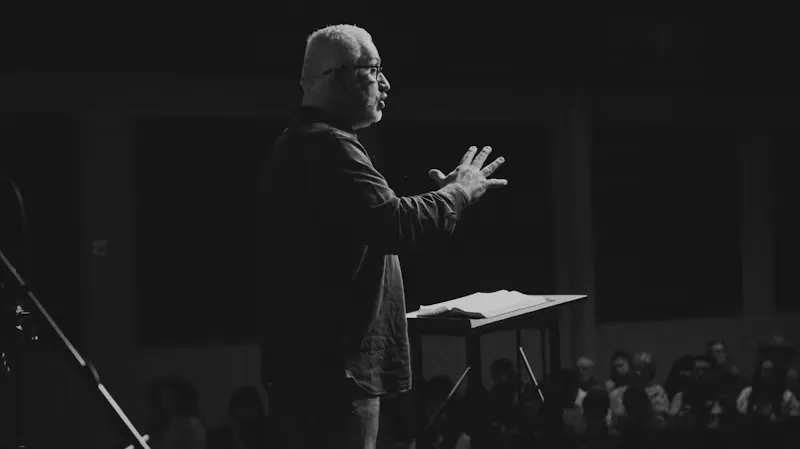
Aaron Golub’s work connects lived experience with practical methods for leadership, resilience, and performance. As the first legally blind Division I athlete to play in a game, he draws on his experience as a Tulane football player and team captain to explore how people respond when a path becomes difficult. His approach can be relevant to organizations seeking interactive learning rather than a message that stops at inspiration. Learn more about Aaron’s resilience speaking and his mindset speaking work.
Before selecting a session, define the work challenge. Is the team navigating change, handling setbacks, improving communication under pressure, or building a stronger habit of accountability? Share the audience, setting, and outcome you want participants to practice. That context helps shape a useful discussion, whether the format is a keynote, workshop, consulting session, or coaching engagement.
For background on Aaron’s experience and approach, visit his biography or review a client testimonial. The right format depends on the group’s goals, schedule, and needs; a conversation can clarify what kind of support makes sense.
Organizations can make that conversation more productive by preparing a few details in advance. Describe the audience and its current challenge, the moment when pressure tends to show up, and what participants should be able to do differently afterward. For example, a leadership team might want to practice surfacing risks during a changing project; a school team may want a shared way to regroup after a setback. State constraints such as format, timing, and whether the session is virtual or in person. These details help distinguish a useful learning goal from a broad wish to “build resilience.”
It is also worth planning for follow-through before the event. Choose a manager or facilitator who will connect the session to a current work situation. Within the next few days, that person can invite participants to use one tool, such as separating confirmed facts from assumptions or assigning an owner to a next step. At a later check-in, ask what was easy to apply and what conditions made it difficult. A keynote or workshop can introduce a method; leaders make it part of the team’s work by using the same language and reinforcing the behavior afterward.
For a relevant starting point, review Aaron’s resilience speaking page, his mindset speaking page, and other practical insights. These pages can help you identify which themes align with your team before you discuss a tailored engagement.
Frequently asked questions
Is resilience at work the same as being positive?
No. Resilience includes recognizing difficulty, communicating honestly, and adapting. It does not require people to feel upbeat or to ignore real constraints.
Can a team build resilience if change is outside its control?
Yes. A team may not control a decision or external event, but it can clarify what is known, prepare for plausible effects, communicate needs, and decide what it can influence. Those actions do not remove uncertainty, but they can make the response more coordinated.
What is one resilience exercise a manager can try this week?
Choose one active challenge and ask the team to name the facts, the assumptions, the next controllable action, and the person responsible for it. Set a short follow-up time to review what changed. Keep the conversation specific to work rather than asking for a general display of confidence.
Does resilience mean employees should manage stress on their own?
No. Individual habits may help, but leaders and organizations also shape workload, clarity, access to support, and the safety of raising concerns. Resilience is stronger when people can use practical skills within working conditions that allow them to do so.
Discuss a resilience session for your organization
Make resilience part of how the team works
Resilience at work grows when people can face facts, take responsibility for a next step, communicate early, and adjust together. Start with one real pressure point, practice a clear response, and make time to learn from what happens.