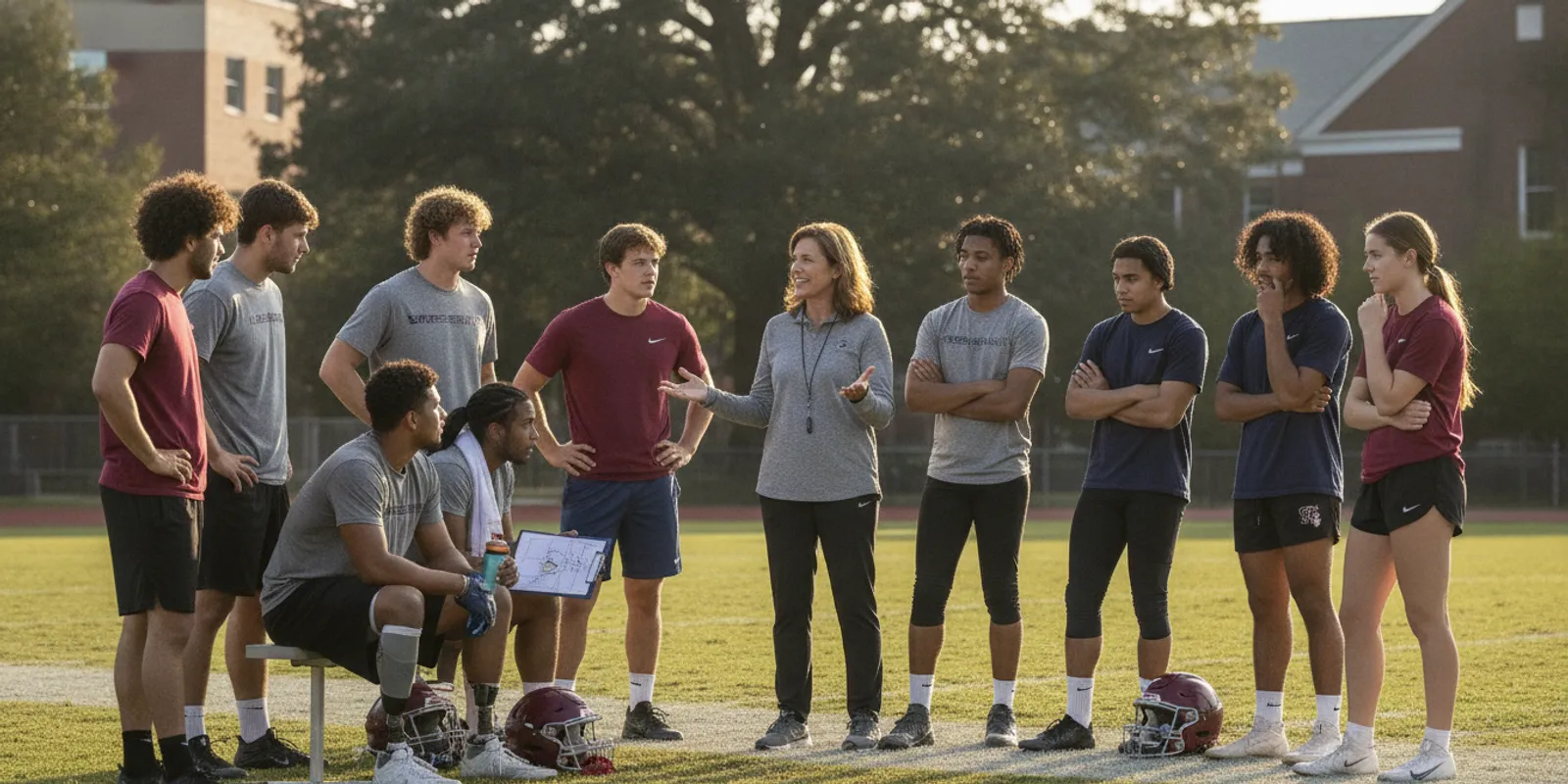
Student athlete development works best when it prepares people for more than the next practice or competition. It combines academic progress, athletic growth, well-being, leadership, and preparation for life beyond sport. For athletic departments, coaches, and campus leaders, the practical challenge is making those goals part of the everyday team experience—not adding another presentation that athletes forget by Monday.
Discuss a program for your athletes
What does student athlete development include?
Student athlete development is the intentional support that helps athletes grow across the roles and transitions that shape their lives. Athletics is a major part of the experience, but it is not the whole experience. A strong approach helps each person learn, perform, contribute to a team, care for their well-being, and make informed choices about what comes next.
That definition matters because programs can become unbalanced. A department may offer a useful career workshop, for example, but athletes may not be able to attend because of practice or travel. A team may talk about leadership, but give athletes no meaningful responsibility to practice it. Development is not only the content a program delivers. It is also whether athletes can access it, apply it, and get support as their needs change.
Research and campus programs reflect this broad view. The NCAA's Student-Athlete Health and Wellness Study examines student-athlete health and well-being. UCLA's student-athlete development resources describe programs available to students, including mentoring and leadership opportunities. These examples are reminders to build development around the athlete's whole experience and the resources already available on campus.
Why should development continue beyond athletic performance?
Performance is essential to sport, but it cannot be the only measure of an athlete's growth. A team also depends on communication, trust, preparation, and the ability to respond constructively when plans change. Those capabilities affect how athletes train and compete, and they matter in classrooms, campus life, and future work.
Development that includes more than performance can help athletes:
- Make decisions under pressure. Athletes practice assessing a situation, asking for relevant information, and choosing a next step instead of reacting automatically.
- Communicate across differences. Teammates learn to clarify expectations, listen, give feedback, and address friction before it grows.
- Take ownership without carrying everything alone. Personal accountability can coexist with asking for help, using support services, and naming a barrier.
- See themselves beyond a roster role. Athletes can build interests, skills, and relationships that remain valuable through injuries, role changes, graduation, and transitions out of sport.
The point is not to diminish competition or assume every athlete has the same goals. It is to make sure that competitive demands do not crowd out the broader learning and support students need. An athlete's aspirations, circumstances, and timing matter. Some may be focused on a professional pathway; others may be preparing for a career in another field. A useful program leaves room for both.
Which areas belong in a student athlete development plan?
A practical plan starts with a few connected areas rather than a long list of disconnected events. The table below can help a department check whether it has a balanced approach. It is a planning tool, not a prescribed sequence; each campus should adapt it to its resources and athlete feedback.
| Development area | What athletes practice | Example of an observable sign |
|---|---|---|
| Academic and career growth | Planning around demands, exploring interests, and connecting skills to future options | An athlete can name a next academic or career step and the support available |
| Well-being and support | Recognizing pressure, communicating needs, and knowing where to seek appropriate help | Athletes can identify trusted support routes without being expected to manage every challenge alone |
| Leadership and teamwork | Taking responsibility, listening, giving useful feedback, and resolving disagreement | Team members can explain shared expectations and raise a concern constructively |
| Communication and self-advocacy | Asking questions, setting boundaries, and discussing barriers respectfully | An athlete can prepare for a conversation with a coach, instructor, or support professional |
| Transition and identity | Reflecting on strengths and preparing for changes in role, season, or life after sport | Athletes can describe skills and interests that are not limited to their current position |
These areas overlap. A student who is learning to communicate about a schedule conflict is practicing self-advocacy, planning, and relationship skills at once. A captain who helps the team reset after a difficult loss is practicing leadership and emotional regulation while contributing to performance. When programs use shared language across areas, athletes can recognize that the skills transfer.
How can a department build development into the season?
Start with the rhythm of the team rather than assuming athletes can add another commitment. A useful process has five steps: listen, choose a focus, practice it, reinforce it, and review what is changing.
- Listen before designing. Ask athletes what feels useful, what gets in the way, and which transitions they are preparing for. Use more than one way to hear from them: a short conversation, a team discussion, or a confidential feedback route. Be clear about who will see responses and how they will be used. Do not promise confidentiality if the process cannot provide it.
- Choose one or two outcomes. Replace a broad aim such as “build leaders” with a behavior the group can practice. For example: “Athletes will know how to raise a concern early and identify the next person to contact if it remains unresolved.” A specific outcome makes it easier to plan a useful session and judge whether it helped.
- Fit learning into real moments. Match the format to the season. A team meeting may suit a short conversation about communication before competition. A quieter period may be better for career exploration or a longer workshop. Check timing, accessibility, travel, academic calendars, and the difference between a first-year athlete's needs and those of a graduating athlete.
- Practice rather than only explain. Give athletes a realistic scenario, a brief framework, and time to try it. For example, ask small groups to plan how they would clarify a changed role with a coach, or how teammates could address an unclear handoff. Debrief what made the conversation productive. Keep the activity respectful; no one should have to disclose personal information to participate.
- Reinforce and review. Coaches and campus partners can refer back to the same language during ordinary team interactions. After a few weeks, ask what athletes have used, what remains unclear, and what support should change. Use the answers to adjust the next session rather than treating one event as a complete solution.
Consistency does not mean giving every athlete identical support. A shared foundation can sit alongside individual conversations and referrals to appropriate campus resources. Coaches should know the limits of their role and follow the institution's established procedures when an athlete needs specialized support.
What does the framework look like in practice?
Imagine a team that has had a demanding stretch of competition. Communication becomes rushed, small disagreements linger, and athletes are unsure how to raise concerns about changing responsibilities. A generic talk about “being resilient” may produce a moment of energy, but it does not necessarily give the team a way to act differently.
A more practical session begins with a specific challenge the team recognizes. The facilitator helps the group separate what it can control from what it cannot, then practices a short communication routine: state the situation, explain the impact, ask a clear question, and agree on a next step. Athletes work through a realistic scenario in pairs or small groups. The coach then identifies one routine the team will use during the next week, such as a brief check-in after practice. The team revisits it and discusses what helped or needs adjustment.
This approach does not promise that conflict will disappear or that every difficult outcome can be controlled. It gives people a repeatable way to respond, learn, and coordinate under pressure. The same structure can be adapted to new captains, role changes, academic demands, or preparing for the end of a season.
For example, an athletic department could focus a workshop on leadership and team communication, then have coaches reinforce a shared tool during the season. An outside speaker or facilitator can contribute a fresh perspective and interactive practice, while the department connects that learning to its own ongoing support. Aaron's speaking and workshop topics include leadership, adversity, and disability, themes that can be tailored to an organization's context. His experience as the first legally blind Division I athlete to play in a game, as a Tulane football player and team captain, informs practical lessons about navigating challenges rather than serving as a substitute for a department's development plan.
How can leaders tell whether the approach is helping?
Measure whether athletes can use what they practiced, not just whether they attended. Attendance can help identify reach and scheduling barriers, but it does not show whether learning transferred to daily life. Select a small set of measures that match the chosen outcome and that the department can collect responsibly.
- Access: Who could attend, and which groups or schedules were missed? What adjustments would make the next opportunity more accessible?
- Understanding: Can participants explain the framework or identify a next step in a short scenario? Ask about application, not just whether they liked the session.
- Use: In a follow-up conversation, can athletes give an example of using the tool or describe what stopped them from doing so?
- Team practice: Are coaches and athletes using the agreed language or routine consistently? Look for examples, not assumptions.
- Fit: What should be kept, changed, or removed? Invite candid feedback and explain how it will inform the next cycle.
Keep evaluation proportionate and respectful. Do not treat a short questionnaire as a diagnosis or make an athlete's access to support depend on sharing personal details. Where concerns involve well-being or specialized needs, use qualified campus professionals and established processes. The purpose of evaluation is to improve the learning environment, not to label individuals.
What mistakes can weaken student athlete development?
Relying on one inspirational event. A keynote or workshop may introduce a useful idea, but the idea needs follow-up. Decide in advance what coaches, staff, or campus partners will reinforce afterward.
Confusing toughness with silence. Resilience is not pretending that pressure has no effect. Teams benefit when athletes can acknowledge a challenge, seek appropriate help, and choose a constructive response. Avoid language that makes asking for support sound like failure.
Using the same plan for everyone. Athletes differ in experience, identity, goals, schedule, and stage of transition. Offer a shared base but ask what adjustments will make learning relevant and accessible.
Leaving development to coaches alone. Coaches shape daily culture, but they may not be the right resource for every academic, career, or well-being concern. Build clear connections with the campus professionals and services that can help.
Counting activity instead of learning. A packed calendar can look productive while leaving athletes little time to reflect or practice. Fewer, well-timed sessions with reinforcement may be more useful than a series of disconnected events.
When can an outside speaker or facilitator help?
An outside partner can be useful when a department needs an engaging shared experience, a structured workshop, or help turning a broad challenge into practical team behaviors. Before booking, clarify the audience, the outcome, the season calendar, accessibility needs, and what will happen after the event. Ask how participants will practice the ideas and how the session can connect with existing campus resources.
Choose the format based on the need. A keynote can introduce a common language to a large group. An interactive workshop can give a smaller group time to rehearse a skill. Consulting or coaching may suit leaders who need follow-through on team communication or accountability. Aaron's leadership speaking and motivational speaking are available as part of a broader set of speaking and development options. His background and approach can help an organizer assess relevance, while a conversation about the audience and goals should shape the engagement.
For any outside session, ask for clear learning objectives and a plan for participation. Interactive work should be appropriate to the audience and should not require athletes to disclose disability, health, or personal experiences. A thoughtful facilitator makes space for honest discussion while keeping the focus on the practical skill the group is there to build.
Connect with Aaron about your program
Frequently asked questions
Is student athlete development only about preparing for life after sport?
No. Transition beyond sport is an important part, but development also supports students during their athletic careers: academics, communication, leadership, well-being, and team contribution. The timing and emphasis can shift as an athlete's needs change.
How can a small athletic department start?
Begin with one conversation and one practical outcome. Ask athletes where support is most needed, select a behavior to practice, and connect the effort to existing campus resources. Review after a few weeks before adding more activities.
How does development relate to performance?
Skills such as preparation, communication, accountability, and recovery can support how a team works together. They do not guarantee a particular result. Treat them as capabilities to practice and assess alongside the team's other goals.
What does research say about the transition out of sport?
A study in the Journal of Athlete Development and Experience describes the development and evaluation of an online course focused on life after sports for college student-athletes. It is one example of transition-focused work; departments should consider their own students' needs and the available evidence when choosing a program.
Can a workshop replace ongoing support?
No. A workshop can introduce and rehearse a tool, but it cannot replace ongoing relationships, campus resources, or specialized support. Plan how coaches and staff will reinforce learning and where athletes can turn with questions afterward.
Student athlete development becomes meaningful when athletes can apply what they learn in the moments that shape their season and their lives. Start with their needs, practice specific skills, and keep refining the approach through listening and follow-through.